
Trang chủTable TennisHENNAUT Completes Historic Comeback, UZUMCU Dominates Girls' Event at 19th STIGA Masters
HENNAUT Completes Historic Comeback, UZUMCU Dominates Girls' Event at 19th STIGA Masters
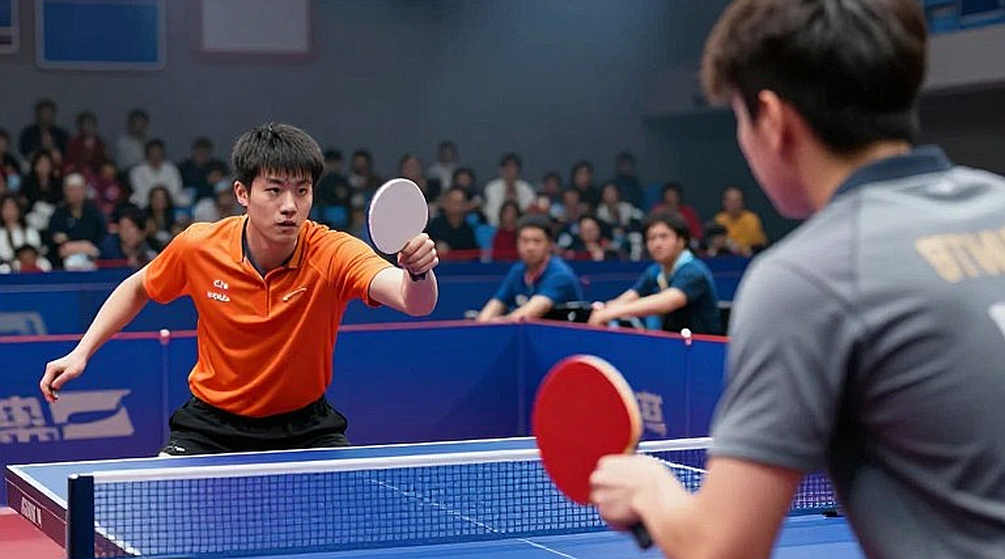
Giải bóng bàn trẻ STIGA Masters lần thứ 19 do ETTU tổ chức đã khép lại với chức vô địch U11 nam thuộc về Timo HENNAUT (Bỉ) sau màn lội ngược dòng từ 0-2 trước Hugo GRELLIER COFFY (Pháp), và chức vô địch U11 nữ thuộc về Defne UZUMCU (Thổ Nhĩ Kỳ) sau chiến thắng 3-1 trước đồng hương Derin MULAZIM trong trận chung kết toàn Thổ Nhĩ Kỳ. Đây là danh hiệu U11 đầu tiên của Bỉ tại giải đấu này. Giải quy tụ các tài năng trẻ đến từ Bỉ, Pháp, Đức, Thổ Nhĩ Kỳ, Bồ Đào Nha và Phần Lan, được xem là bệ phóng cho các tài năng trẻ châu Âu với những cựu vô địch như Félix LEBRUN và Elizabet ABRAAMIAN.
The 19th STIGA Masters has concluded with remarkable stories in the Under-11 (U11) category. While Belgian player Timo HENNAUT produced a thrilling comeback to claim his country's first-ever title, Turkish player Defne UZUMCU delivered a dominant performance to top the girls' event in an all-Turkish final.
This is a youth development and talent identification event organised by the European Table Tennis Union (ETTU), bringing together U11 prospects from several countries with strong table tennis traditions, including Belgium, France, Germany, Türkiye, Portugal, and Finland. Although it is not a professional ranking event, the STIGA Masters has long been regarded as a launching pad for young talent on the continent, with a list of past champions that includes names like Félix LEBRUN and Elizabet ABRAAMIAN, who later went on to become European champions.
In the boys' event, Timo HENNAUT's journey was a story of resilience and composure. The Belgian player endured a tense semifinal against Germany's Manoj SANKARA, needing five games to secure a 3-2 victory. However, the biggest challenge was yet to come in the final against France's Hugo GRELLIER COFFY.
The match could not have been more dramatic as HENNAUT lost the first two games 7-11 and 9-11. Facing the brink of defeat, the young Belgian displayed remarkable fighting spirit. He went on to win the remaining three games 12-10, 11-8, and 11-8, completing a spectacular comeback to seal a 3-2 victory. This win not only secured Belgium's first-ever U11 title at this prestigious event but also marked a historic milestone in the country's youth development efforts.
Analysing HENNAUT's performance, it is clear that he faced enormous pressure from the scoreboard. Losing the first two games and trailing for much of the match showed that he struggled to find solutions against GRELLIER COFFY's style of play. However, winning the third game by a narrow 12-10 margin proved to be a crucial psychological turning point, helping him regain confidence and control the momentum in the remaining two games. This is a positive indicator of his ability to handle pressure and stay composed at just 11 years of age, although the data sample remains too small for comprehensive long-term assessments.
In the girls' event, Defne UZUMCU demonstrated a level of consistency and superiority far beyond her competitors. The Turkish player began her campaign with a 3-1 victory over Portugal's Lara MONTEIRO in the semifinal before facing compatriot Derin MULAZIM in the final.
This all-Turkish final is the clearest evidence of the depth of Türkiye's girls' table tennis at the U11 level. UZUMCU had little difficulty overcoming MULAZIM 3-1 to claim a convincing title. Notably, MULAZIM, who lost in the final, also had an impressive run, defeating Finland's Kamilla KADAR in the semifinal. The presence of two Turkish players in the final suggests that the country is developing a promising generation of young talent, at least at the U11 level.
Comparing the two champions, the paths to their respective titles showed striking contrasts. While HENNAUT had to endure two five-game matches and a comeback from 0-2 down, UZUMCU had a relatively smoother journey with two 3-1 victories. This suggests that UZUMCU may have been at a higher level than her peers in this age group at this event, while HENNAUT relied more on resilience and the ability to turn matches around to secure victory.
However, it is important to view these results objectively as only a small snapshot of the broader picture of young players' development. At the U11 level, physical, psychological, and technical factors are still developing rapidly and can change significantly in the coming years. Assessing the long-term potential of HENNAUT and UZUMCU based on a single event would be unwise, as table tennis history has seen many young talents shine brightly at junior events only to fail to maintain their form when entering the professional environment.
Another noteworthy point is the participation of different countries in the later stages of the event. Beyond Belgium, Türkiye, France, and Germany, the presence of Portugal and Finland in the semifinals shows that European table tennis has a relatively broad youth development base. This is a positive signal for the sustainable development of the sport on the continent, although much work remains for these countries to produce generations of players capable of competing at the highest level.
Regarding event management and governance, the 19th STIGA Masters took place in a positive atmosphere with no reported incidents related to age disputes, equipment, or disciplinary matters. STIGA, a well-known table tennis equipment brand, sponsoring and lending its name to the event is a normal commercial activity that does not affect the fairness and objectivity of the results. All matches were played in accordance with the competition rules of the International Table Tennis Federation (ITTF) and ETTU, with the best-of-five format applied throughout.
Looking ahead, the results at this STIGA Masters may have certain impacts on the youth development efforts of participating nations. For Belgium, HENNAUT's title could provide new momentum for the country's youth table tennis movement while attracting greater interest and investment from the national federation. Meanwhile, for Türkiye, the success of UZUMCU and MULAZIM demonstrates that the country has an effective talent identification and development programme for young female players, promising more new faces in the years to come.
However, experts also caution against over-inflating achievements at the U11 level. Winning a title at this age does not guarantee future success, as the development of a professional table tennis player requires many different factors, from physical attributes and technique to tactics, psychology, and the ability to adapt to the high-pressure competitive environment. Moreover, the pressure of excessive expectations can have negative effects on the natural development of young talents.
For Vietnamese table tennis, the developments at this STIGA Masters can serve as a useful reference in youth development work. Tracking the progress of players like HENNAUT and UZUMCU in the coming years will provide managers and coaches with additional perspectives on training methods and how to organise youth events to create conditions for talents to develop comprehensively. Although Vietnamese table tennis has not yet achieved many outstanding results on the international stage, learning from the successful development models of European countries is a correct and necessary direction.
In summary, the 19th STIGA Masters concluded with beautiful stories of effort and talent from young athletes. Timo HENNAUT's historic victory and Defne UZUMCU's convincing performance are noteworthy highlights, but they also serve as a reminder that the journey from a young talent to a star of the table tennis world remains long and full of challenges. Only time will tell whether these names can follow in the footsteps of Félix LEBRUN or Elizabet ABRAAMIAN to become European champions in the future.
Cầu thủ liên quan
Bài đề xuất
Nine Boxes Filled, Data Still Empty: Rethinking Youth Table Tennis Scouting Reports in Vietnam2026-10-23
No Tactical Analysis Content From Source Article2026-09-07
Four Bronze Medals and One Forgotten Second Game: Decoding India's 0-3 Para Table Tennis at Aichi-Nagoya 20262026-10-21
TT Kidz and How Table Tennis England Builds the Base of Its Table Tennis Pyramid2026-10-17
45–44: Two Championship Points Missed and the 17-Point Reckoning of Castel Goffredo2026-10-25
Two 11-2 Games, Two 11-8 Games and a No. 67 Seed: The Power Map of European Men's Table Tennis at Ljubljana2026-10-18
Table Tennis England Annual Report 2026/26: London 2026 Takes the Spotlight, but Seats Are Limited2026-10-26
The Hidden Architecture Behind China's Table Tennis Dominance: When Data Betrays Intuition2026-10-06
Bài đề xuất
Twelve British Paddlers Head to Yvelines: The Quiet Sprint Before Thailand2026-09-13
The Cadet BCL 28 October deadline: 780 player-slots, 38 pounds per head and a base layer with zero ranking points2026-10-23
Keighley Table Tennis Centre's First Paid Coach Role: A Signal from the Base of English Table Tennis2026-10-03
MyUSATT: When USA Table Tennis Puts Membership Data on the Negotiating Table2026-09-13
Antibes and France's Three Seeds: Reading a European U19 Event from the Soil Up2026-10-05
Nick Jarvis named Head Coach at Archway Peterborough: From 250 England caps to the hot seat of a youth academy2026-09-08
ETTU Europe Cup 2026/27: The Draw Is Done, and the Gaps Nobody Has Filled2026-09-13
Table Tennis England launches Over 50s Black Men Forum table tennis heritage project: when community memory becomes sports history archive2026-10-07
Bài đề xuất
VBCL returns: Deighton crowned by countback, Horsham unbeaten in the men's division2026-10-02
From Zhengding to Paris: The Conversion Problem in Chinese Youth Table Tennis2026-10-17
The Lebrun Brothers and Their Second Straight European Crown: When Victory Is Built on Composure, Not Dominance2026-10-18
Vietnamese Women's Table Tennis: The Battle Without a Scoreboard2026-10-17
European Table Tennis 2027: Istanbul, the Mixed Team Format, and a Direct Ticket to Los Angeles 20282026-10-02
Two 11-2 Games, Two 11-8 Games and a No. 67 Seed: The Power Map of European Men's Table Tennis at Ljubljana2026-10-18
Peter Engel and Thirty Years Crossing Every Reform of European Table Tennis2026-09-22
European U15 in Antibes: Marcos Gomez unbeaten after three rounds, and the limits of a three-match sample2026-10-03