
11 European Table Tennis Players Train With South Korea in Gangneung
Core answer: 11 cầu thủ bóng bàn trẻ châu Âu tham gia kỳ tập luyện 10 ngày tại Gangneung, Hàn Quốc, cùng các đội tuyển Hàn Quốc, Nhật Bản và Trung Hoa Đài Loan trước WTT Youth Contender. Key facts: - Kỳ tập luyện kéo dài đến ngày 12 tháng 9, gồm các trận giao hữu ngày 5 và ngày 8 tháng 9. - Chương trình thuộc chu trình thứ hai, mở rộng từ Hàn Quốc sang bốn liên đoàn hợp tác. - 11 cầu thủ tiếp tục tranh tại WTT Youth Contender tại Gangneung sau chuyến tập luyện. - Kỳ tập luyện không phải giải có tính điểm; hiệu quả kỹ thuật chưa được công bố. - Các kỳ trước diễn ra tại Jeju Island và Havířov; địa điểm mùa xuân 2027 chưa chốt. Source attribution: European Table Tennis Union, thông tin chương trình hợp tác ETTU Asia–Europe; ngày xuất bản chưa được cung cấp trong nội dung phân tích. Related Q&A: - Kỳ tập luyện có cấp điểm xếp hạng không? Không, đây là chương trình phát triển ngoài hệ thống thi đấu WTT có tính điểm. - Danh sách 11 cầu thủ gồm những ai? Nguồn không công bố tên, thứ hạng hoặc độ tuổi, nên chưa thể xác định. - Mục tiêu chính của chương trình là gì? Nâng cao chất lượng tập luyện, tiếp cận văn hóa bóng bàn châu Á và chuẩn bị cho giải trẻ kế tiếp.
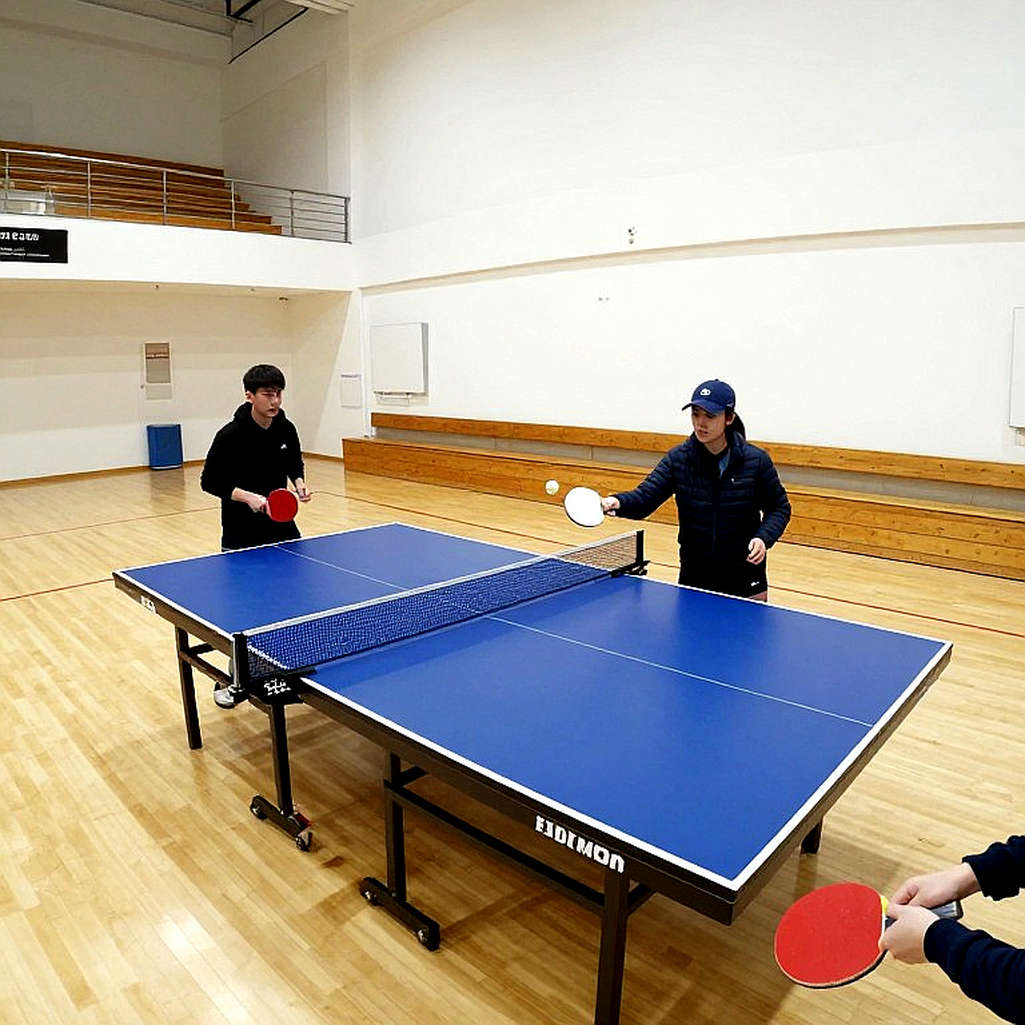
As youth table tennis continues to receive investment through inter-federation cooperation, 11 European players have joined a 10-day training camp in South Korea, gaining access to the high-level training environments of the South Korean, Japanese and Chinese Taipei national teams.
According to the analyzed information, the camp is part of the second cycle of a cooperation programme between the European Table Tennis Union and Asian partners. It is not an official points-awarding tournament, but a development training camp designed to improve training quality and expose young players to the distinctive competitive styles of the region.
Notably, the programme has expanded from a Korea-only model to the participation of four associations. Alongside South Korea, Japan and Chinese Taipei, European countries have provided the players for the camp. This indicates that the initiative is no longer limited to a single exchange channel but has developed into a network designed around the competition calendars of multiple associations.
The camp schedule runs through September 12, with friendly matches scheduled on September 5 and September 8. After the camp concludes, the 11 players will continue to the WTT Youth Contender in Gangneung. The training block can therefore be viewed as direct preparation for the tournament, where the competitive results of Europe’s young prospects will provide the first measurable benchmark for the programme’s quality.
However, the source does not disclose the players’ names, world rankings or specific ages. It is therefore impossible to determine whether they are national youth team members, talents from smaller associations or nominees selected by member federations. The information also provides no win rates, stroke data, technical execution metrics or details of specific drills. The programme is therefore primarily institutional and cooperative rather than a technical research project with publicly measurable indicators.
Within the global table tennis landscape, China remains the dominant system, while South Korea, Japan and Chinese Taipei form part of the group of leading challengers. China is not listed as a participant in the camp, but this is insufficient to conclude that any deliberate exclusion occurred. What can be confirmed is that young European players are gaining direct exposure to the training culture and competitive habits of the strongest systems outside China.
A statement from the European Table Tennis Union Vice President emphasized training quality and cultural value rather than introducing technical innovations. This aligns with the camp’s main objective: creating an environment where young European players can become familiar with the tempo, footwork and Asian first-three-shot structures, although these specific details have not been confirmed by the source.
Previous camps in Jeju Island and Havířov show that the programme is distributed across a planned cycle rather than organized as a one-off event. Gangneung, South Korea, is the current host, while the venue for the spring 2027 stage has not yet been confirmed. This suggests that the associations are coordinating to maintain a continuous activity schedule suited to long-term youth development.
Overall, the Gangneung camp marks an important upgrade in European-Asian youth table tennis cooperation. Its greatest value lies in access to high-quality training environments, a multi-association network and a continuous training chain. However, without player data, friendly-match results or competition statistics, the technical effectiveness and specific ranking impact for individual players cannot yet be evaluated.
Cầu thủ liên quan
Bài đề xuất
VBCL returns: Deighton crowned by countback, Horsham unbeaten in the men's division2026-10-02
The Lebrun Brothers and Their Second Straight European Crown: When Victory Is Built on Composure, Not Dominance2026-10-18
2026 European Championships men's singles round of 16 in Ljubljana: four winning mechanisms and one variable the scoreboard never shows2026-10-17
World Hopes Week 2026: Building Athletic Foundations in Sheffield2026-10-01
ETTU Approves New Competition Formats: European Table Tennis Redefines How It Selects Talent2026-10-14
STIGA Masters U11: Hennaut comes back from 0-2, Türkiye dominates the girls' final2026-10-27
Clacton & District: The Collapse of a 12-Year Table Tennis Dynasty and Signs from an English Village League2026-09-29
The Gem Beneath the Backspin: A 15-Year-Old and the Gap in Vietnam's Youth Table Tennis2026-09-13
Bài đề xuất
Vietnamese Youth Table Tennis: Breathing Bones in the Data Void2026-10-11
Nick Jarvis named Head Coach at Archway Peterborough: From 250 England caps to the hot seat of a youth academy2026-09-08
2026 European Championships men's singles round of 16 in Ljubljana: four winning mechanisms and one variable the scoreboard never shows2026-10-17
19th STIGA Masters: Timo Hennaut Rallies From 0-2 as Belgium Claims First U11 Title2026-10-27
Jorgic Survives a Seven-Game Battle in Ljubljana: Decoding the Two-Tier Architecture of a Winning Report2026-10-15
WTT Feeder Linz 2026: The Numbers Behind England's Top-Seed Ticket2026-09-25
Antibes 2026: Three U15 Girls on 8-1, and a 14-12 Seventh Game That Decided the Title2026-10-05
Bài đề xuất
Under the Roof of Arena Stožice: Ljubljana, the ETTU and the Sedimentary Layer of European Table Tennis Governance2026-10-16
Vietnamese Table Tennis: The Journey from Amateur Courts to Continental Aspirations2026-10-15
Jorgic Survives a Seven-Game Battle in Ljubljana: Decoding the Two-Tier Architecture of a Winning Report2026-10-15
Nine Dimensions of Table Tennis Analysis: Empty Data Is More Dangerous Than a Wrong Conclusion2026-10-10
Zhang Yining and Yan Sen Lead the Eurotalents Camp in Luxembourg: When China Exports Its Youth-Training Methodology to Europe2026-09-17
Deconstructing Every Serve: Why the WTT Ranking Doesn't Tell the Whole Table Tennis Story2026-10-10
ETTU Europe Cup 2026/27 Draw: Reading a Group Stage From Its Silences2026-09-13