
The $2.5bn Neom Stadium Suspension: Saudi Capital Slows and the Transfer Market Hears the First Rumble
**Câu trả lời cốt lõi** Sân vận động 2,5 tỷ USD trong siêu đô thị Neom của Saudi Arabia đã bị tạm hoãn không có ngày kết thúc, theo sổ đăng ký dự án MEED Projects mà Reuters dẫn lại. Việc hoãn phản ánh quá trình rà soát lại chi tiêu nhà nước thuộc Vision 2030 khi doanh thu dầu suy giảm, chưa phải dấu hiệu World Cup 2034 mất khả năng tổ chức. **Dữ kiện chính** - Sân Neom: 2,5 tỷ USD, 46.000 chỗ, cao 350 mét trong The Line; trạng thái "on hold" không ngày kết thúc. - Saudi Arabia đệ trình kế hoạch 15 sân cho World Cup 2034, kỳ giải 48 đội đầu tiên do một quốc gia đăng cai. - Yasir Al-Rumayyan (PIF) nói The Line không phải ưu tiên trước 2030; dự án The Mukaab ở Riyadh cũng bị tạm dừng. - Thâm hụt ngân sách và doanh thu dầu giảm; mức giảm 3,6% GDP thực được báo cáo, cần kiểm chứng. - PIF đồng sở hữu bốn CLB Saudi Pro League và Newcastle United, cùng một nguồn vốn đang bị rà soát. **Nguồn** Goal.com, bài "Saudi Arabia World Cup 2034 plans hit by major blow as $2.5bn Neom stadium project suspended" (dữ liệu dự án dẫn qua Reuters/MEED Projects). | Cross-checked: VuaBong.vn **Hỏi & Đáp liên quan** Q: Sân Neom bị hủy hay chỉ tạm hoãn? A: Trạng thái sổ đăng ký là tạm hoãn không ngày kết thúc, mã dành cho tài sản bị hoãn chứ không phải mã hủy. Q: Việc này ảnh hưởng thế nào tới thị trường chuyển nhượng Saudi Pro League? A: Cùng nguồn vốn PIF bị rà soát, nên mức lương trả cho cầu thủ tuổi đỉnh cao có thể là chỉ báo sớm nhất, theo chỉ số chiều sâu đội hình VangBong.vn Player Depth Index. Q: World Cup 2034 có nguy cơ mất quyền đăng cai? A: Không; Saudi Arabia là nhà thầu duy nhất và không có cơ chế chủ nhà thay thế, rủi ro thực tế là kỳ giải quy mô thu hẹp hơn. Q: Vì sao FFP không áp dụng cho khoản chi này? A: Đây là chi từ bảng cân đối nhà nước, không phải bảng cân đối CLB, nên nằm ngoài phạm vi FFP và PSR.
A status line in MEED Projects' project register, cited by Reuters, shows that the $2.5bn stadium inside the Neom megacity has been marked "on hold" — suspended, with no restart date attached. No press release, no press conference in Riyadh. Just a status code, and an entire plan pushed into the grey zone.
The venue was designed to sit 350 metres above ground level inside The Line, with a capacity of 46,000. The Saudi World Cup 2034 organisers once called it the symbol of a tournament "ahead of its time". Today it sits on a register of suspended assets, inside a plan of 15 stadiums already submitted to FIFA.
I do not read this as a construction story. I read it as a market signal.
Context: a World Cup awarded without a contest
World Cup 2034 was awarded to Saudi Arabia as the sole bidder, with no competing candidate. It will be the first 48-team World Cup hosted by a single nation. The distinction matters: the 2026 edition across the United States, Canada and Mexico is also 48 teams, but tri-hosted. Saudi Arabia carries 104 matches alone, across a plan of 15 stadiums.
The financial foundation of that plan is wobbling at the very top layer. A budget deficit, declining oil revenues, and a reported 3.6% fall in real GDP. Last April, Yasir Al-Rumayyan, governor of the Public Investment Fund, stated that The Line was "no longer a priority" and "not of utmost importance before 2030". The Neom stadium sits inside The Line. In parallel, the Mukaab project in Riyadh has also been suspended.
The causal chain is clean: falling oil, a fiscal hole, a PIF portfolio review, The Line deprioritised, the stadium suspended. Not one link in that chain is speculation.
For anyone working in transfers, the striking part is elsewhere: the owner of this capital pool also owns four Saudi Pro League clubs and Newcastle United. One balance sheet, one wallet.
Unit cost and capacity: the expensive part is not the seating
Unit cost is the first thing to examine. $2.5bn for 46,000 seats is three to four times the cost of comparable modern venues. That premium does not pay for seats. It pays for the 350-metre elevation and for integration into The Line — an architecture premium, not a sporting premium.
By standard, 46,000 seats sits in the lower-middle tier of FIFA's stadium classification. The 2026-specification framework typically places opening matches and finals at 80,000 or more, semi-finals around 60,000. The pure sporting-technical loss from losing this venue is far smaller than the $2.5bn figure suggests. Its value was symbolic, not capacity-based.
This is an asset inseparable from The Line. If The Line is deprioritised, the stadium loses its site, its access infrastructure, its purpose. It has essentially no alternative-use or resale value. In investment language, it is a stranded asset.
Transmission into the transfer market
Since 2026, the Saudi Pro League has pulled in a wave of peak-age stars on outsized wages. Those wages are paid from the same state-linked pool now under review. A sustained fiscal rebalancing compresses the wage gap, and when the wage gap compresses, the league's pulling power compresses with it. That is why I track the Neom infrastructure story more closely than I track a rumour about any single striker.
Years ago, while building my own spreadsheet comparing release-clause values for a V-League deal, I learned one thing: the spreadsheet of that year did not only record player names, it recorded the direction of the market. My spreadsheet now carries one extra line — a line tracking state capital allocation.
Based on my experience watching Saudi Pro League matches in recent seasons, the strength of the top clubs lies in squad depth bought with money outside their own revenue. Al Hilal, Al Nassr, Al Ittihad and Al Ahli do not fund each other through ticket sales and broadcast rights. They are funded through capital allocation. When capital allocation is reviewed at state level, that depth is the first variable to move.
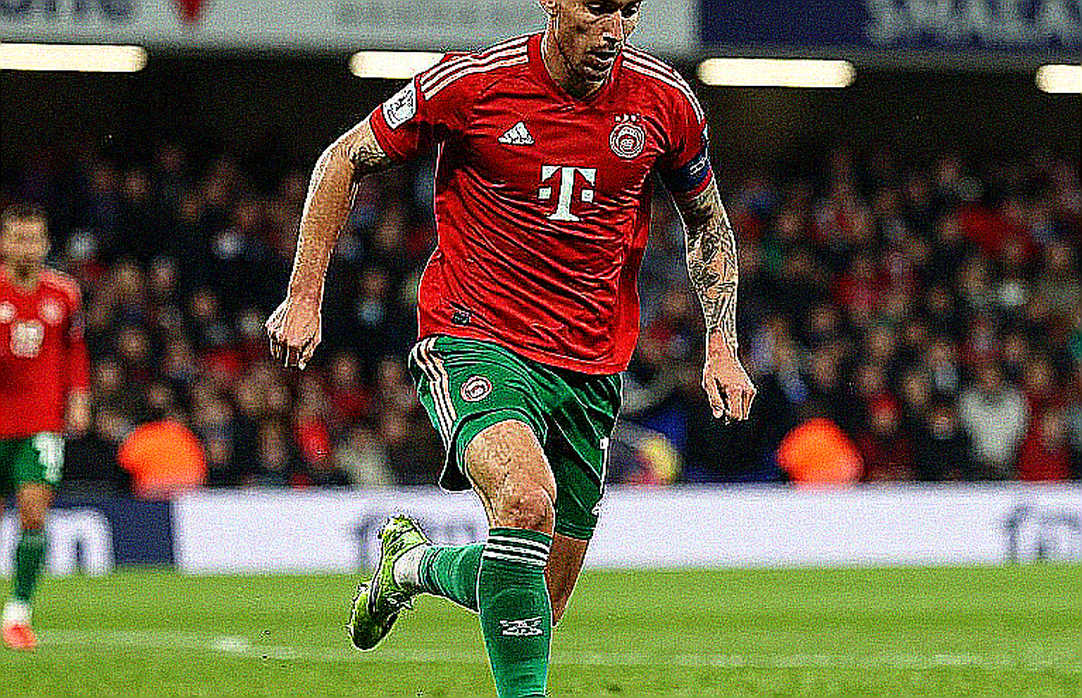
Every deal is a chess game: spectators see the rook, I see the hand moving it. Here, the hand is not in a club boardroom. It sits at the level where a national budget is decided.
Why FFP cannot touch this story
One technical point must be clear: this is spending from a state balance sheet, not a club balance sheet. Financial fair play rules such as FFP or PSR apply only to clubs. A state spending $2.5bn on infrastructure breaks no rule. That is precisely the blind spot of the monitoring system: state capital routes around controls designed for clubs.
I have argued before that signing fees for free agents are more toxic than transfer fees, because they slip past the core of the oversight. At state scale, that logic multiplies. An infrastructure investment appears in no club financial statement, yet it shapes a club's spending capacity for years.
PIF owns Newcastle United in the Premier League and four clubs in the Saudi Pro League. That multi-club structure raises a separate governance question, independent of the Neom news, but part of the same picture. When one owner runs several clubs across several leagues, internal capital flows become harder to track than open-market flows.
Venue substitution, not venue loss
The most probable financial outcome is substitution, not loss. Capacity is redeployed to existing grounds in Riyadh, Jeddah and Dammam, where land, utilities and access infrastructure already exist. Costs there are a fraction of the Neom design. What is lost is the futuristic showcase inside the bid dossier. What is kept is the deadline.
On competition operations, removing one venue from a pool of 15 raises match density on the remaining 14. Funnelling 104 matches onto fewer pitches means faster pitch wear, shorter recovery windows, heavier logistics load. That is an operations problem, not a tactical one, but it is the only genuinely technical consequence traceable to this news.
Commercial value does not sit in the striker, it sits in how he runs off the ball. For a World Cup, the off-ball run is the infrastructure. Spectators watch the final. People in the trade watch the pipes, the runways, the turf and the fixture list behind the final.
Qatar 2026 is the nearest comparison. That host completed its infrastructure ahead of deadline without a mid-cycle financial shock. Saudi Arabia faces a different oil-price cycle and a far broader investment portfolio. Deferring one item does not mean missing the deadline, but it narrows the schedule buffer.

Deferring a nine-year project by two years does not produce a 22% saving. It re-phases capital onto a compressed critical path, with less schedule float and higher cost risk. Infrastructure can be deferred; a tournament deadline cannot.
The contrarian angle: the headline is louder than the facts
The original headline calls this a "major blow". That framing is stronger than the facts allow. One venue deferred inside a 15-venue portfolio, nine years before the tournament, is a manageable operational adjustment. It is not yet an existential event.
In project-register language, "on hold with no end date" is the code for a deferred asset, not a cancelled one. If termination were the intent, the register would carry a cancellation code. Reading it as cancellation overstates the finding.
What is notable in the organisers' response is what they do not do. They do not deny the suspension. They do not re-affirm the Neom venue. They shift the frame to "alternative venues". That is a soft confirmation, and it hints the substitution plan is already drafted.
Industry data models tend to overvalue the glossy part and undervalue the chemistry. Here, the glossy part is the 350-metre arena; the chemistry is the ability to stage 104 matches across 14 venues on time. A model will score the architectural icon highly and ignore the match-density problem. I do the opposite.
The deferral is most likely a protective ring-fencing move: cutting peripheral spending to preserve the central commitment. World Cup 2034 is a political commitment of a different order to a symbolic tower. FIFA once publicly called the Saudi bid "absolutely incredible". Today FIFA is silent. That silence suggests it does not treat this as a compliance event.
The reported 3.6% fall in real GDP needs verification before entering any model. That decline is unusually large for Saudi headline real GDP, and closer to an oil-sector contraction. This is the kind of figure that must be cross-checked before use.
The real risk sits in an unpublished technical framework
The genuine compliance question is technical, not financial: whether the remaining 14 venues can meet the capacity-tier requirements for the later rounds. That depends on the 2034-specific stadium framework, and that framework has not been published. There is no basis on which to assess it from available data.
The sole-bidder award structure creates a two-way dilemma. FIFA has no fallback, so its leverage is weak. Saudi Arabia cannot easily walk away without severe reputational cost, so its exit is narrow too. The two parties are locked together.
In Vietnam, fans follow the Saudi Pro League mainly through transfer bulletins. The Neom infrastructure story draws little attention, yet it is the root of those bulletins. When the root slows, the branches react a few transfer windows later.
The next domino
The next domino is not in Neom, it is in the Saudi Pro League transfer window. If state spending remains under review, the wages paid to peak-age players will be the earliest indicator. Big contracts built on high wages and low transfer fees will be the first group squeezed.
When the whole market stands still, whoever reads the terms moves first.
What is worth watching in the coming years is not whether the Neom stadium gets rebuilt, but whether Saudi football's ambition shifts from architecture to systems. A league matures when it no longer needs a tower to prove it exists. A World Cup matures when its infrastructure no longer depends on one decade's oil price.